What Is Somatic Movement and How Can It Help You Reconnect with Your Body?
Many people think of movement as something you do to the body: train it, shape it, stretch it, strengthen it, push it, measure it. Somatic movement begins from a different place.
It asks: What can you feel from the inside?
Instead of focusing on how a movement looks, how many calories it burns, or whether it counts as a workout, somatic movement focuses on internal experience. You move slowly. You notice sensation. You pay attention to breath, tension, ease, resistance, comfort, and emotion. You learn to listen before you try to fix.
Somatic movement is a gentle, awareness-based approach to movement that helps you notice your body from the inside rather than judge it from the outside. For people who feel disconnected from their bodies, chronically tense, stressed, numb, restless, or stuck in performance mode, this can be a powerful shift.
What does “somatic” mean?
The word somatic comes from “soma,” meaning the living body as experienced from within. In everyday terms, somatic practices are body-based practices that place attention on internal sensation.
That can include gentle floor-based movement, breath awareness, body scanning, slow mobility work, trauma-sensitive movement, or mindful walking. Somatic movement is not one single method. It is more like a family of approaches. What they share is attention to felt sense — the inner experience of being in your body.
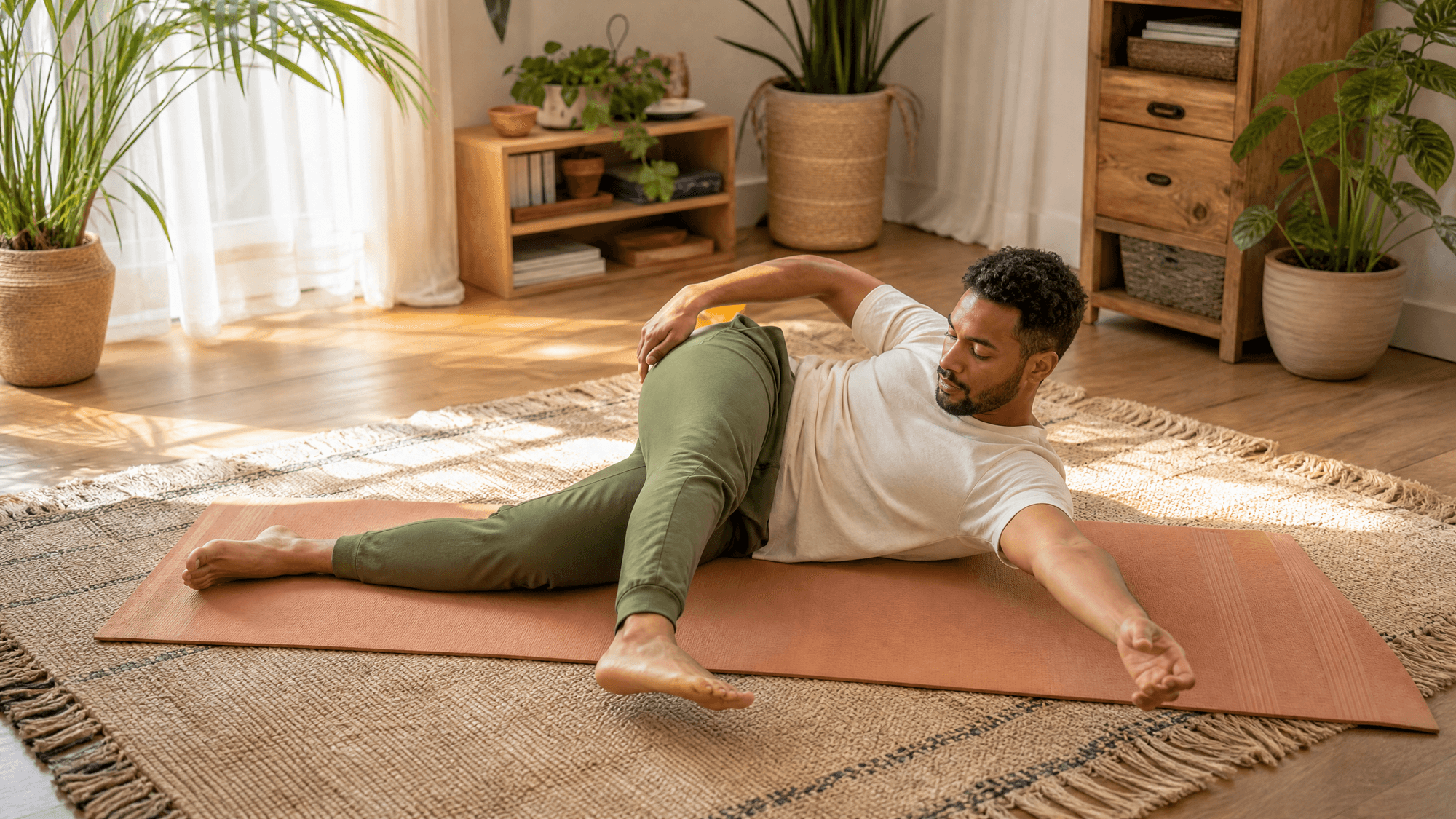
A somatic practice might look quiet from the outside. Someone may be lying on the floor, slowly turning their head, noticing the weight of their back on the mat, or moving one shoulder with curiosity. The point is not to achieve an impressive shape. The point is to notice what is happening as you move.
Why do people feel disconnected from their bodies?
Disconnection is common. It can happen for many reasons. Some people learn to ignore their body because life is busy and productivity is rewarded. Some disconnect after stress, grief, trauma, chronic pain, illness, burnout, dieting, overtraining, or years of treating the body as a project. Others simply spend most of the day in their head, on screens, or under pressure.
Disconnection can feel like numbness, constant tension, restlessness, harsh body judgment, or difficulty noticing hunger, fatigue, stress, and pain cues until they become loud. It can also look like overriding limits again and again, pushing through until the body forces a stop. Somatic movement does not blame you for this. It simply offers a way back.
How somatic movement differs from stretching or exercise
Somatic movement can include stretching and exercise-like movements, but the intention is different.
Conventional movement focus | Somatic movement focus |
How far can I go? | What do I notice as I move? |
How does it look? | How does it feel from the inside? |
Can I push harder? | Can I move with more ease? |
Did I perform well? | Did I learn something about my body? |
This does not mean intensity is bad. Strength, cardio, and mobility training are valuable. Somatic movement simply fills a different role. It can help you approach movement with more listening and less force.
What somatic movement can help with
Somatic movement is often used to support stress regulation, body awareness, recovery, mobility, emotional awareness, and self-trust. Slower movement and breath can signal safety. Gentle exploration can help you notice limits earlier. On lower-energy days, it can offer a way to move without turning every session into a workout.
It is important not to overstate this. Somatic movement is not a guaranteed cure for trauma, chronic pain, anxiety, depression, or medical conditions. For some people, body awareness can even feel uncomfortable at first. If you have trauma history, panic, dissociation, or pain that feels unsafe to explore alone, it may be best to work with a qualified professional.
A good somatic practice should always include choice. You can stop. You can open your eyes. You can change position. You can make the movement smaller. You can focus on the room instead of internal sensation. Your body does not need to be forced into awareness.

A beginner somatic practice: 7 minutes
Try this when you have a quiet moment. You can do it on the floor, on a bed, or seated in a chair.
Start by noticing contact points. Feel your feet on the floor, your back against the chair, your body on the mat, or your hands resting. You are not trying to relax. You are noticing what is already here.
Then follow one inhale and one exhale. Where do you feel movement? Chest, ribs, belly, back, throat, shoulders? There is no correct answer.
Slowly turn your head a little to the right, then back to centre. Turn a little to the left, then back. Move slowly enough that you can feel the path. Notice whether one side feels easier.
Next, lift your shoulders slightly toward your ears, then let them lower. Do this a few times without forcing them down. Let gravity help. Then slowly open and close one hand. Notice the palm, fingers, wrist, and forearm. Try the other hand. Then both.
If you are seated, slowly round your back a little, then lengthen. If you are lying down, gently rock the knees side to side. Keep the range small. Notice where movement feels smooth and where it feels guarded.
To finish, look around the room. Name three things you see. Feel your feet, hands, or the support beneath you. Notice whether anything feels different from the start.
That is enough. Somatic movement does not need to be long. It needs to be honest.
What to expect at first
At first, some people feel calm. Others feel impatient. Some feel nothing. Some notice tension they had been ignoring. None of these responses are wrong. A helpful approach is to practise with curiosity rather than expectation. If you feel bored, slow the movement down and notice more detail. If you feel restless, keep your eyes open and use the feeling of your feet or hands as an anchor. If emotion comes up, pause and choose whether you want to continue. If you feel pain, make the movement smaller or stop.
Reconnection is not always dramatic. Often it is quiet. You realise your shoulders are tense before they become painful. You notice you are tired before you crash. You feel your breath before stress takes over completely. Those small moments are meaningful.
Why somatic movement fits modern life
Many of us live in a constant state of outward attention. Messages, deadlines, screens, comparison, noise, and pressure keep attention outside the body. Somatic movement is a way to come back inside without needing to escape your life.
It can be done between meetings, after training, before sleep, during recovery, or on a day when a hard workout would be too much. It can support athletes, beginners, stressed professionals, parents, people returning to movement, and anyone trying to build a kinder relationship with their body.
The aim is not to become perfectly calm. The aim is to become more connected and responsive.
A simple question to carry with you
The next time you feel tense, overwhelmed, or disconnected, pause and ask:What is my body telling me before I try to change it?
Maybe the answer is “I am tired.” Maybe it is “I am bracing.” Maybe it is “I need to move.” Maybe it is “I need support.” Listening does not solve everything. But it changes the relationship. Your body becomes less of an enemy and more of a source of information.
Want to go deeper?
If this gave you a useful first step, Sanva is being built to help you explore practices like this with more guidance and support. At sanva.app, you will find recovery sessions, breathing practices, meditation, somatic-style movement, multi-day challenges, full courses, and a community designed to help you build a more connected wellbeing routine.
Somatic movement can begin with one slow breath and one honest sensation. Sanva can help you continue from there.