The Recovery Stack: 5 Practices That Actually Move the Needle

Most recovery advice sounds more expensive than useful. Cold plunges, compression boots, infrared blankets, massage guns, and dramatic supplements can all make recovery feel like a separate hobby. Some of those tools may help a little. Some just feel good. But if your sleep is inconsistent, your meals are random, and every workout turns into a test, the fancy stuff is mostly decoration.
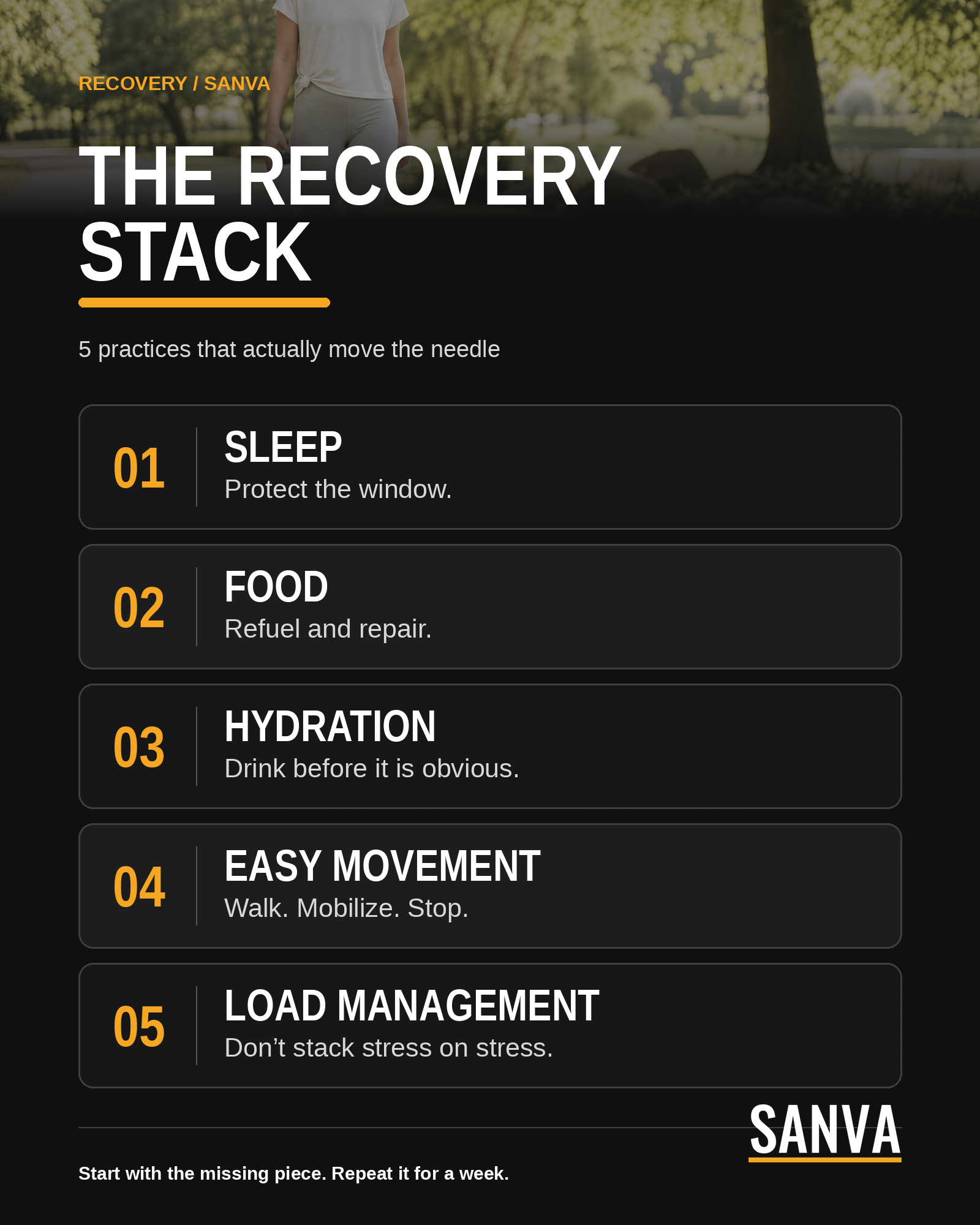
A useful recovery stack is simpler than that. It is the handful of habits that make tomorrow’s body feel more ready than today’s: enough sleep, enough food, enough fluid, easy movement, and honest training load.
1. Protect the sleep window
Sleep is the least flashy recovery tool, which is probably why people keep looking past it. It affects muscle repair, appetite, mood, coordination, motivation, and how hard the same workout feels the next day. Adults are generally recommended to get around seven to nine hours of sleep, and people in heavier training blocks may need more than their usual baseline.
The practical move is not to chase perfect sleep hygiene. Start by protecting a sleep window you can repeat. If you need to wake at 6:30, recovery probably starts around 10:00 the night before, not with a supplement after training. Dim the lights a little earlier. Put your phone somewhere less convenient. Let the last thirty minutes of the day be boring. Boring is not a failure; it is a signal to your nervous system that the day is ending.
If you slept badly, treat that as real information. You do not need to punish yourself with a harder session to prove discipline. Often, the disciplined choice is making the day lighter.
2. Eat like recovery is part of training
A lot of people finish a workout and then accidentally under-eat. They are busy, distracted, or still treating food as separate from fitness. But training creates a demand. Recovery is how the body answers it.
Protein supports muscle repair and adaptation. Research reviews suggest total daily protein intake matters more than the exact minute you drink a shake, although getting protein after training can be an easy way to hit the day’s target. Carbohydrates matter too, especially if you run, lift with volume, train often, or feel strangely flat the day after hard sessions. They help replace the fuel you used.
A useful post-workout meal does not need to look like a nutrition plan. Greek yogurt with fruit works. Eggs and toast work. Tofu or chicken with rice works. A smoothie with milk or soy milk works. So does a sandwich with a decent protein source. The point is not to perform wellness. The point is to stop asking your body to rebuild with whatever happens to be left over.

3. Hydrate before it becomes obvious
Hydration sounds too basic until it is missing. Headaches after training, unusually heavy legs, poor concentration, or a “wired but tired” feeling can all be signs that your recovery problem is not exotic. The easiest system is to drink steadily earlier in the day and pay attention to sweat. Hot weather, longer sessions, and salty sweat usually mean water alone may not be enough; you may need sodium with fluids, especially after a hard or sweaty workout.
Recovery nutrition should help you refuel with carbohydrates, repair with protein, and restore fluids lost during exercise. Keep it normal. Drink with meals. Keep a bottle where you work. After a sweaty session, have water and something salty with your next meal. Dark urine all afternoon is feedback. Waking up all night to pee is feedback too. Adjust, without turning hydration into a science project.
4. Use easy movement, not total shutdown
Rest days do not have to mean becoming furniture. For many people, a little easy movement makes soreness feel less sticky. A walk, gentle cycling, relaxed mobility, or ten minutes of floor work can help you feel human again without adding another real training stressor.
The key word is easy. If your recovery run slowly becomes a pace check, it is not recovery anymore. If mobility becomes punishment for being tight, it probably is not helping the way you think it is. Active recovery should leave you feeling a little better at the end than you did at the start.
Try a twenty-minute walk the day after a hard workout. Keep the pace conversational. When you get home, do a few gentle movements for the hips, back, or calves, then stop. The stopping is part of the practice.
5. Stop stacking stress on stress
The most underrated recovery skill is knowing when not to add more. A hard workout is stress. So is poor sleep, travel, alcohol, a deadline, an argument, a skipped meal, and too much caffeine. Your body does not file these into neat categories. It just deals with the total load.
This is why recovery often improves when training gets more honest. You do not need to go hard every day to be consistent. You need enough hard work to create adaptation and enough easy time to absorb it. That might mean two genuinely hard sessions per week, easy days that are actually easy, and a lighter week before your body forces one on you.
Before training, ask: “What am I trying to get from this session?” If the answer is strength, speed, endurance, or skill, train for that. If the real answer is guilt, stress, or needing to prove discipline, be careful. Movement can support mental health, but turning every emotion into intensity is an easy way to dig a recovery hole.
The stack in real life
A good recovery stack should make your week simpler, not more fragile. Sleep enough most nights. Eat after you train. Drink before thirst becomes a problem. Move lightly between hard days. Adjust training when life is already heavy.
That is not a glamorous prescription, which is probably why it works. The basics are not basic because they are weak. They are basic because everything else sits on top of them.If you want to start today, do not overhaul your life. Pick the missing piece that is most obvious and repeat it for a week. Go to bed thirty minutes earlier. Add a real post-workout meal. Take the walk instead of forcing another intense session. One useful change, repeated, will beat a complicated recovery routine you only follow when motivation is high.
For more practical guidance on training, recovery, and building routines that actually fit real life, you can explore related articles on Sanva.app. If you want support beyond reading, the Sanva community and coaching options are there to help you turn the basics into habits you can keep.