The Perfect 10-Minute Morning Mobility Routine
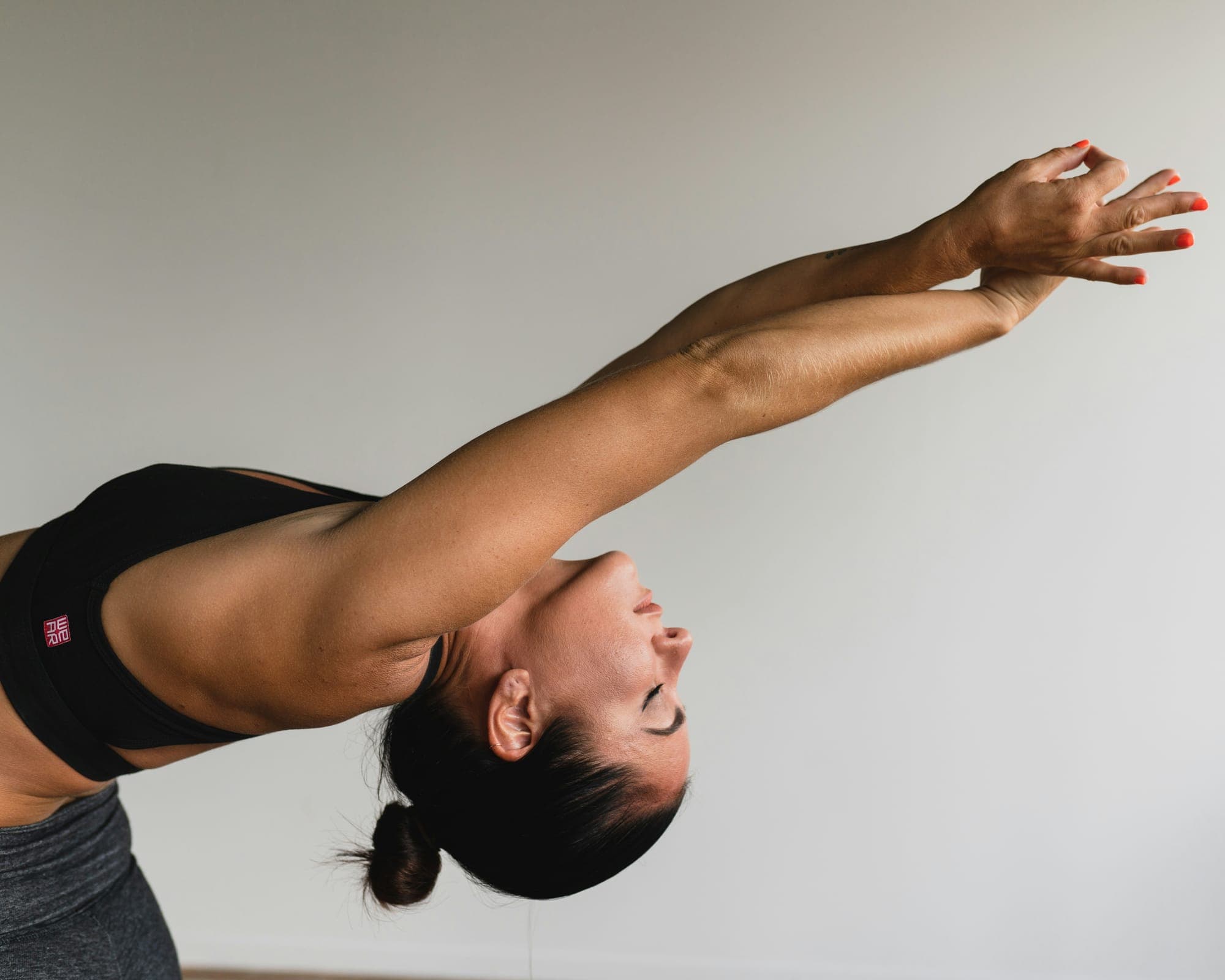
Most people do not need a complicated morning workout. They need a small movement reset that makes the body feel less stiff, less folded, and more ready for the day. Ten minutes is enough when the routine is simple, repeatable, and focused on the joints that usually feel tight after sleep or too much sitting: the spine, shoulders, hips, ankles, and upper back.
A good morning mobility routine is not about forcing flexibility. It is about moving slowly through usable ranges, noticing where the body feels restricted, and giving the nervous system a calm signal that the day has started. Dynamic mobility work moves muscles and joints through active ranges of motion, which is why it tends to fit the morning better than long, passive stretching.
Why mobility belongs in the morning
Morning stiffness is normal. You have been still for hours, your breathing has been shallow, and your joints have not moved through much range. The goal is not to “fix” the body before breakfast. The goal is to create a short bridge between rest and daily movement.
The NHS describes gentle flexibility exercises as movements that can be done at home to support health and mobility, with the sensible advice to wear comfortable clothing, keep water nearby, build up slowly, and increase repetitions gradually. That is the right mindset for this routine. You should finish feeling warmer and more organized, not exhausted.
Sanva principle: Morning mobility should feel like opening the system, not testing it.
This is also why the routine uses controlled movement instead of aggressive bouncing. Dynamic stretching generally means moving a limb through its range of motion repeatedly, while ballistic bouncing at the end of range is discouraged because it may increase injury risk.
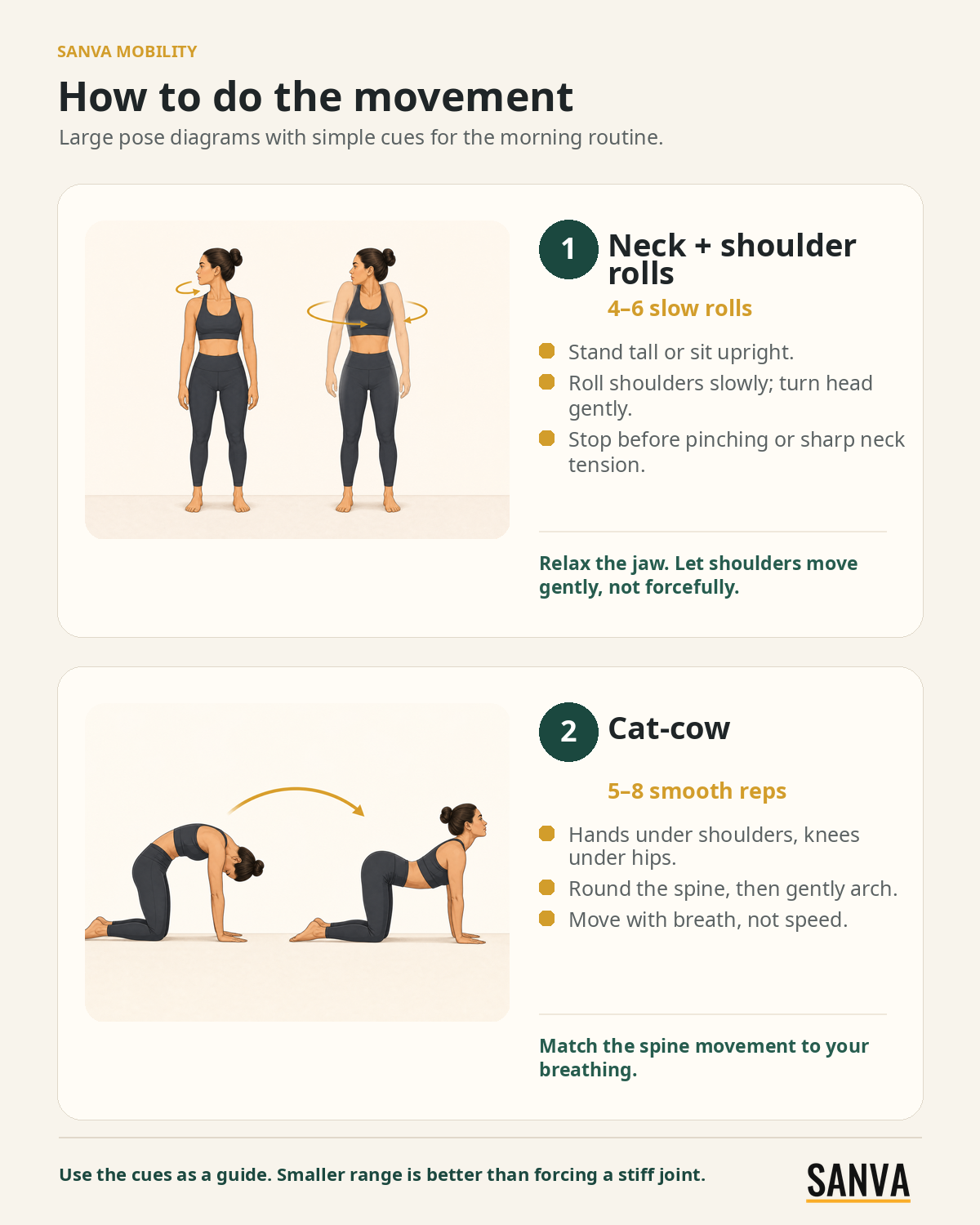
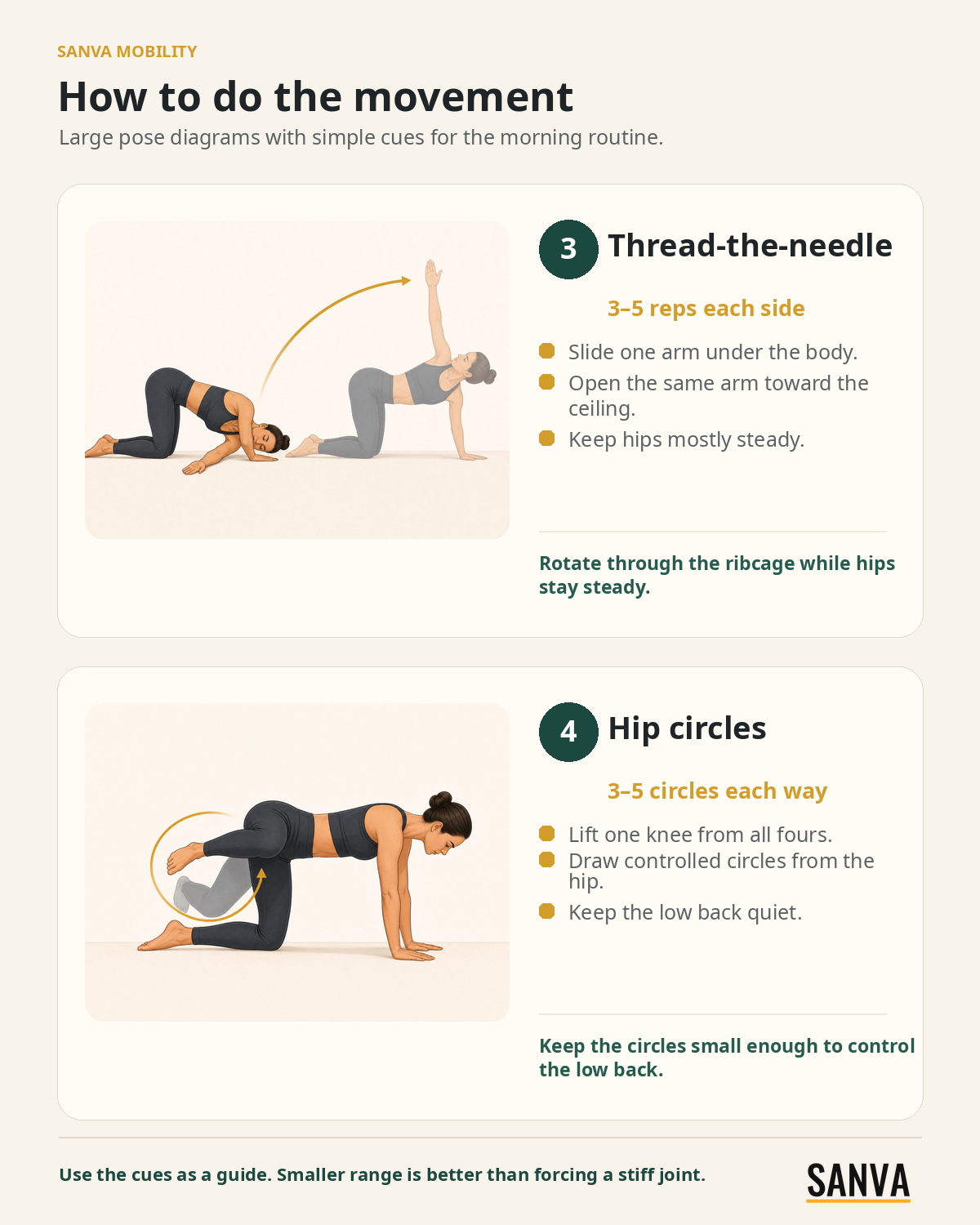
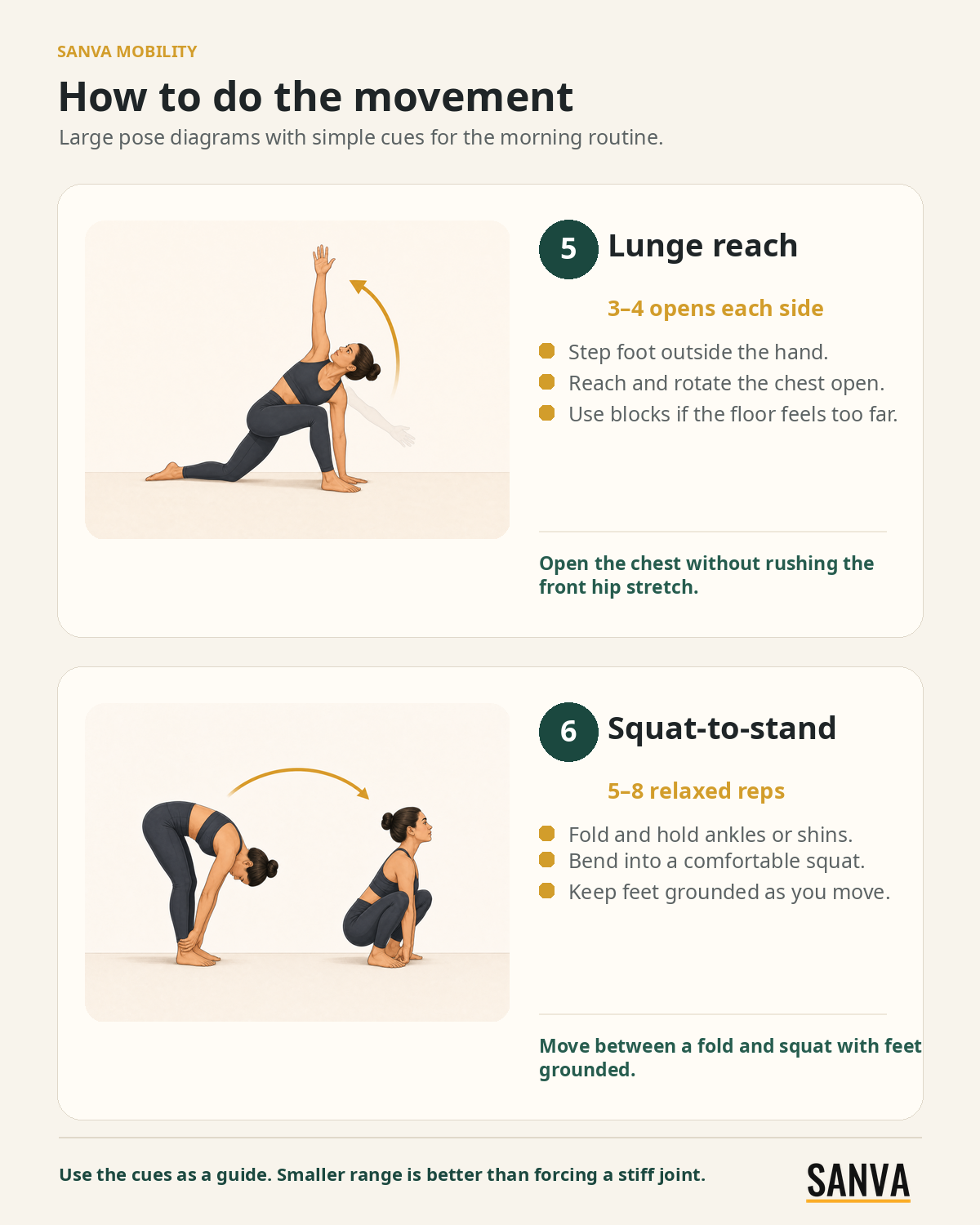
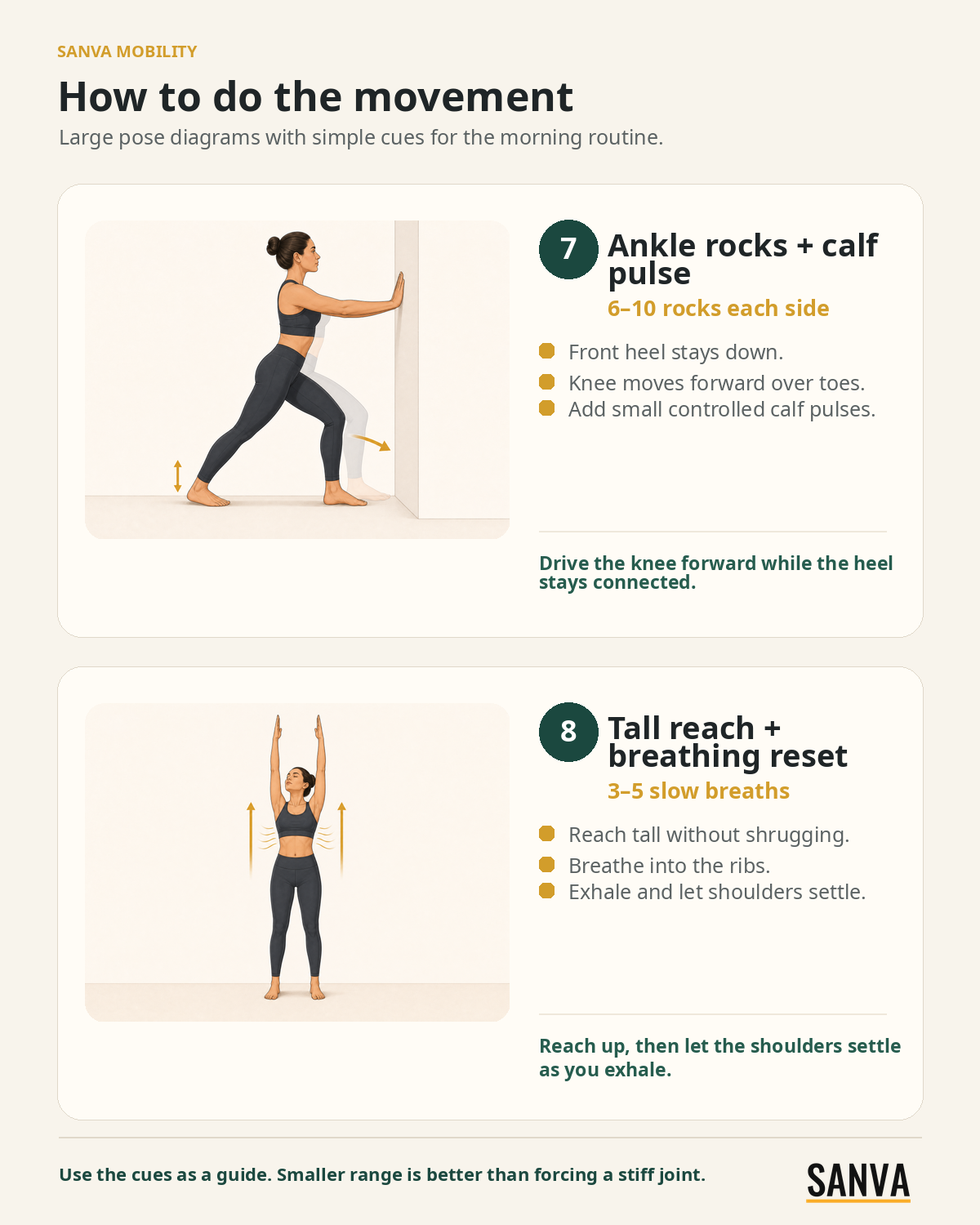
The best version of the routine is the one you can repeat. If you are stiff, tired, or new to mobility work, use smaller ranges and keep the pace slow. If you already move well, increase the smoothness and control rather than adding intensity.
The 10-minute routine
Set a timer for ten minutes and move at a pace that lets you breathe through your nose most of the time. If something feels sharp, pinchy, or unstable, reduce the range or skip that movement. The routine works best barefoot or in flat shoes, on a mat or comfortable floor.
What not to do
Do not turn the routine into a flexibility contest. Long static holds can be useful in the right context, but this morning sequence is designed as a movement primer. Research reviews have found that static stretching can increase range of motion, while also noting that static stretching immediately before performance may reduce strength or power in some situations. For a morning routine, the safer bet is controlled, low-pressure movement.
The same rule applies to pain. Mild stiffness is fine. A gentle stretch is fine. Sharp pain, numbness, tingling, or a joint that feels unstable is not something to push through. If a movement repeatedly causes symptoms, replace it and consider getting individual guidance.
The simple progression
Do this routine for seven mornings before judging it. On day one, it may feel awkward. By day three, the sequence usually starts to feel familiar. By day seven, you will know which area needs the most attention.
A helpful progression is to keep the same ten minutes but improve the quality. Breathe more smoothly. Use less momentum. Make the transitions cleaner. Notice whether your first walk, first squat, first commute, or first training session feels different.
The bottom line
The perfect morning mobility routine is not perfect because it includes secret exercises. It is perfect because it is short enough to repeat, broad enough to cover the whole body, and calm enough to do before the day gets noisy. Ten minutes of simple movement will not replace training, walking, strength work, or recovery, but it can make all of them feel better. The broader baseline still matters: adults benefit from regular weekly movement that includes both aerobic activity and strength-supporting work.
For more detailed mobility progressions, longer movement guides, and coach-supported routines, Sanva.app has deeper resources you can explore when you are ready to build beyond the ten-minute version.