Motivation is a Myth. Here's How to Build a Habit Instead.

Motivation is useful for one thing: getting you to care.It is terrible at showing up every day.
That is why most people do not need a better speech, a bigger goal, or a new personality. They need a system that still works when they are tired, busy, bored, stressed, or not in the mood.
A habit is not a feeling. It is a behavior tied to a cue. You do something in the same situation often enough that the situation starts to pull the action out of you. That is the point. Less debate. Less bargaining. Less waiting for the perfect mood.
Researchers describe habits as automatic responses to familiar contexts. In plain English: your brain likes shortcuts. If you keep doing the same action after the same cue, it slowly takes less mental effort to start.
Stop Trying to Become a Motivated Person
The “motivated person” story sounds nice, but it puts the work in the wrong place. You do not brush your teeth because you wake up inspired by oral hygiene. You do it because it has a place in your day. The cue is obvious. The action is small. The friction is low. The reward is immediate enough. You barely think about it.
That is the model. If you want to train, stretch, walk, eat better, sleep earlier, or drink more water, stop asking, “How do I stay motivated?” Ask, “Where does this fit so clearly that I do not have to keep deciding?”
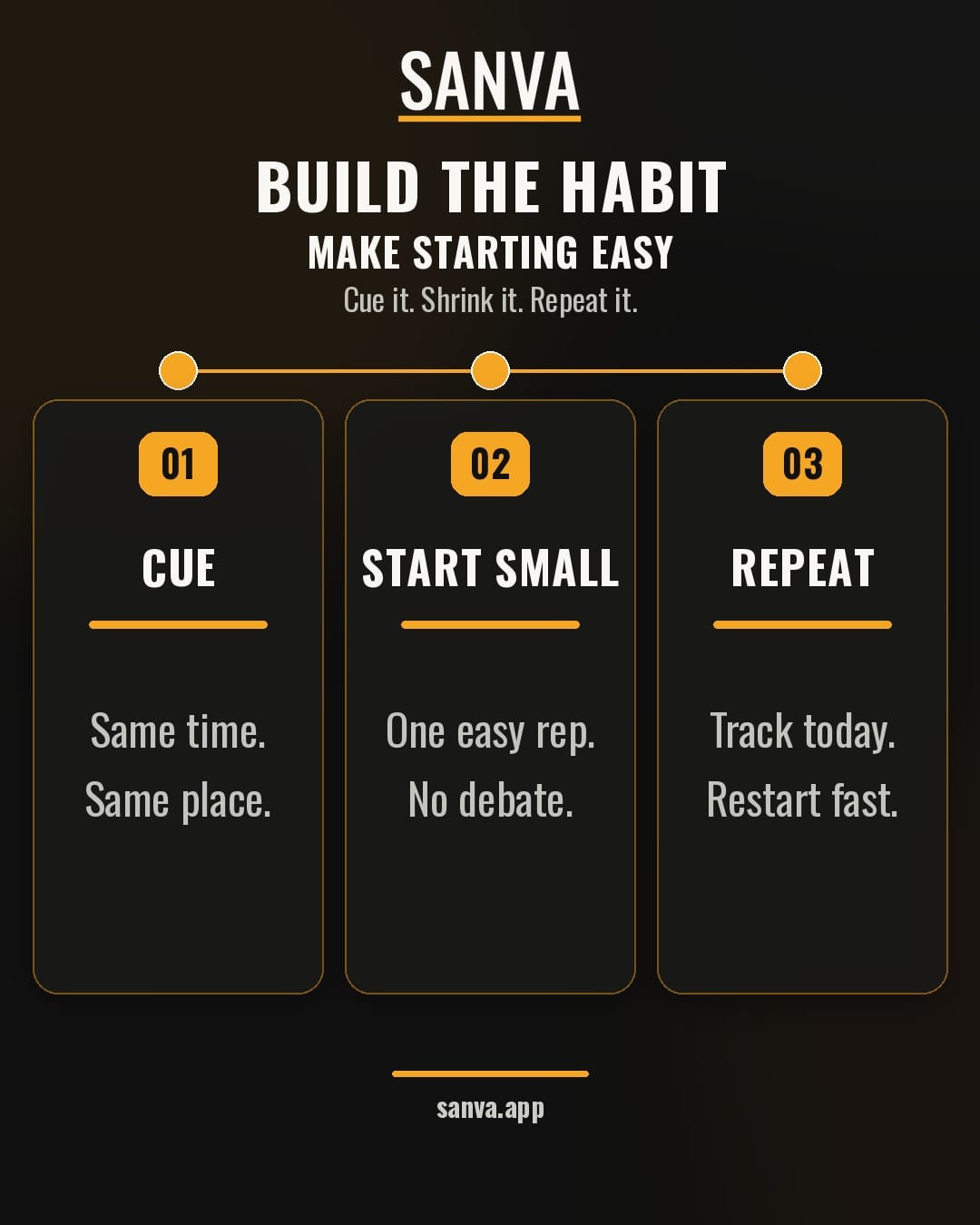
Make the Habit Smaller Than Your Ego Wants
Most habits fail because the first version is too dramatic.
People decide they are going to work out for an hour, overhaul their diet, meditate every morning, and sleep like an athlete by Monday. That is not a habit plan. That is a personality makeover fantasy. Start with the version you can do on a bad day. Not the impressive version. The repeatable version.
One set. Ten minutes. A walk around the block. A glass of water after coffee. Five slow breaths before opening your laptop. The action should feel almost too easy, because the first job is not intensity. The first job is showing your brain, “This is what happens after this cue.”Simple actions tend to become automatic faster than complex routines, and habit strength builds through repetition in a stable context. That means the small version is not a compromise. It is the way in.
Pick a Cue You Already Trust
Do not build a habit around a vague promise like “I’ll do it later.” Later is where habits go to die.Attach the action to something that already happens.
After I make coffee, I drink water. After I close my laptop, I walk for ten minutes. After I brush my teeth, I stretch my hips. After I put on my training shoes, I do the warm-up. This is called an implementation intention: an if-then plan that links a situation with a specific action. It works because it removes one of the biggest failure points: deciding in the moment. The stronger the cue, the less you need to negotiate.
Lower the Friction Before You Need Willpower
Willpower is expensive. Design is cheaper.
Put the shoes by the door. Keep the water bottle filled. Put the dumbbells where you will see them. Move the snacks you do not want to eat out of reach. Make the next right action visible.
This is not “hacking” your life. It is basic environment design. If the habit needs five steps before you can even begin, you have already made it fragile. The easier it is to start, the more often you will start. The more often you start, the more normal it becomes.
Do Not Turn One Miss Into a Story
You will miss days. That does not mean the habit is broken. It means you are a person with a real life. The mistake is not missing once. The mistake is turning one miss into evidence that you cannot be consistent. In habit research, missing an occasional opportunity did not seriously derail the process when people resumed afterward. So do not dramatize it.
Miss once, restart next time. No punishment workout. No “I’ll start again Monday.” No long emotional audit. Just return to the cue and run the small version. A habit is built by repetition, not perfection.
The Real Habit Formula
Here is the whole thing without the fluff.
Choose one behavior. Make it small enough to do on a bad day. Attach it to a cue that already exists. Remove the obvious friction. Repeat it without turning every miss into a crisis. That is it.
Motivation can help you choose the direction. It should not be responsible for carrying the whole plan. The goal is to make the right action easier to start than to avoid.When that happens, you are no longer relying on hype. You are building a behavior that can survive normal life.
For more practical fitness and habit guidance, Sanva.app has related articles, community support, and coaching options if you want help turning the plan into something you can actually repeat.